Adenoids are lymph tissues located in the upper airway between the nose and the back of the throat. They help the body fight off infections by trapping bacteria and germs. However, if you do develop an infection, like a cold or flu, or encounter irritants, like allergens or smoke, the adenoids can swell, leading to nasal congestion.
One side effect of the nasal congestion from enlarged adenoids in children is mouth breathing.
The Connection Between Enlarged Adenoids and Mouth Breathing
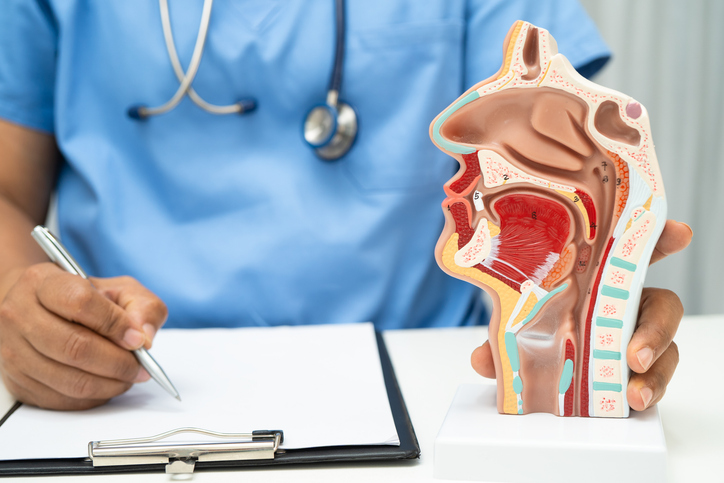
When enlarged adenoids block the path of air through the nose, the only choice is to breathe through the mouth. Bad breath and a dry mouth with cracked lips are common signs of mouth breathing. Children may also be restless while sleeping, snore regularly, have sleep apnea or get regular ear infections.
Is Mouth Breathing a Problem?
Occasional mouth breathing isn’t usually a problem, but long-term mouth breathing can change the shape of a child’s face and affect their behavior.
Diagnosing Enlarged Adenoids
An ENT specialist can look at your child’s adenoids through their mouth using a special mirror or by inserting an endoscope—a flexible tube with a light and camera—through their nose. We may also request an X-ray of the throat and neck.
Treating Enlarged Adenoids
Mouth breathing and restless sleep can significantly impact your child. If we find that enlarged adenoids are the cause of these symptoms, we may recommend an adenoidectomy, a surgery to remove the adenoids. During the surgery, your child will be placed under general anesthesia. The surgeon will remove the adenoids through your child’s mouth, so there won’t be any visible cuts on their skin.
Similar to the adenoids, inflamed tonsils can cause sleep-related breathing issues or frequent infections. That’s why we also recommend removing the tonsils at the same time as the adenoids in a procedure called an adenotonsillectomy.
Recovering from Adenoid Removal
Recovery takes a week or two following the surgery. Your child may have a fever, upset stomach, bad breath, sore throat, neck pain, noisy breathing or an earache during recovery. Avoiding hot, crunchy, spicy or acidic foods during their recovery will alleviate their sore throat. We’re sure your child won’t mind a pint of Lil’ Tiger Ice Cream for dinner.
After they recover from their procedure, your child may still breathe through their mouth out of habit. Remind them to breathe through their nose whenever they can to help them break the habit.
If you have any questions about treating enlarged adenoids or mouth breathing, contact Puget Sound Ear Nose and Throat today.